✓ Free design proof ✓ Quote in 24 hours ✓ DHL worldwide, tracked ✓ Money-back on quality ✓ $49 sample, credited ✓ We reply within 24h (China time) ✉ yuan36984@gmail.com 💬 WhatsApp: +8618578906697
★★★★★China factory-direct
Labels / Woven Clothing Labels / Custom Silicone & Rubber Labels
Factory-direct · Moulded logo labels

Custom Silicone & Rubber Labels

Soft, raised logo labels moulded in silicone or PVC rubber, sewn on through a stitching channel or bonded with heat. Flat 2D or sculpted 3D, colour-matched to your brand. Silicone print transfers from $109 per 250; moulded labels custom quote, free proof.

Quick answer: Rubber labels are logo badges moulded from soft PVC or silicone. The colours are filled into a mould made from your artwork, so the logo is raised and can be flat (2D) or sculpted (3D). Most are sewn on through a thin channel around the edge; others have a heat-press or hook-and-loop backing. Brands use them on jeans, jackets, hoodies, caps and bags. A printed silicone transfer is the thinner, stretchier version for activewear.
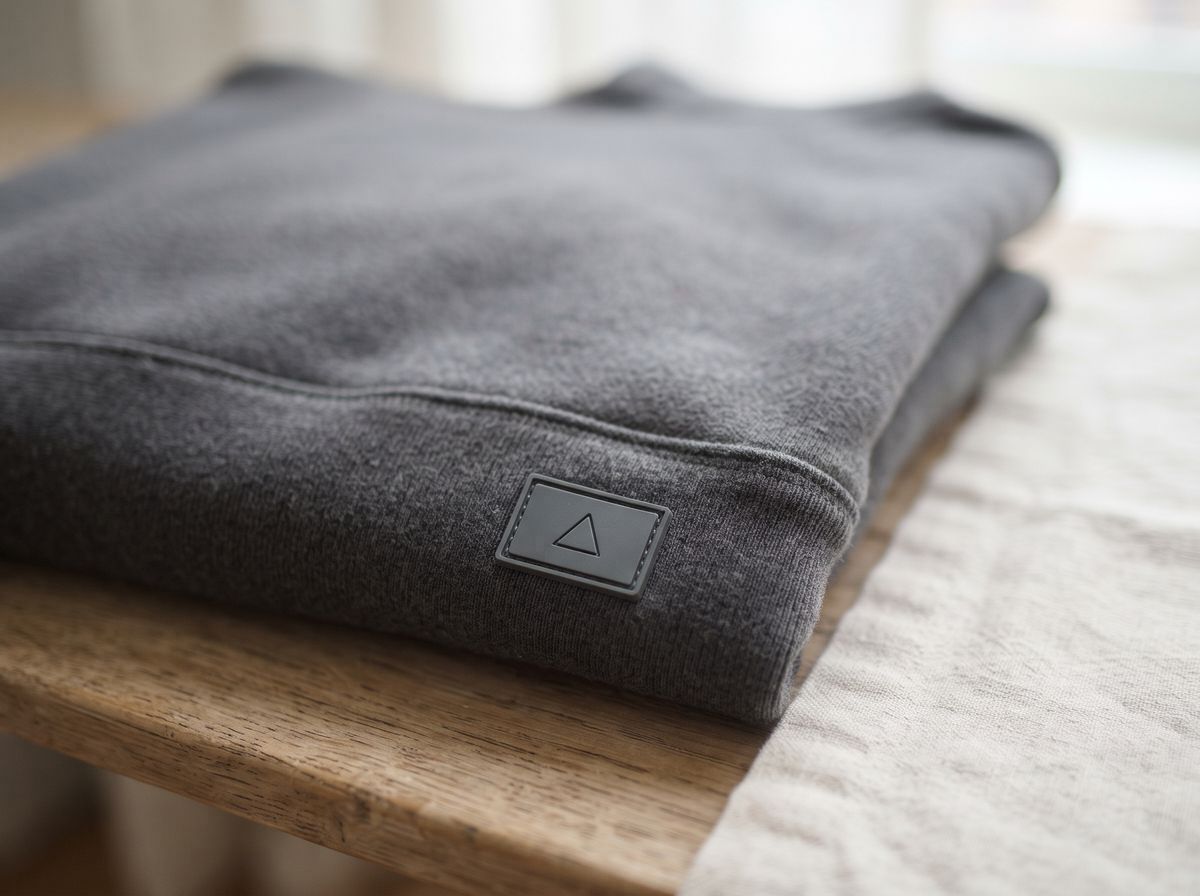
a small dark grey rectangular rubber label with a raised triangle mark stitched onto the hem of a folded charcoal hoodie
What they are

What Are Silicone and Rubber Labels?

A rubber label is a logo badge made by filling a mould with liquid colour, layer by layer, and curing it into a soft, flexible piece. The mould is cut from your artwork, so every colour sits in its own recessed area and the logo stands up from the base. When the badge comes out of the mould it already has its final shape: a rectangle, a circle, a shield or the outline of your mark.

Two materials are used. PVC (polyvinyl chloride) is the traditional one; it is what most people mean by a “rubber patch” or “rubber label” on jeans, jackets and backpacks. Silicone looks almost the same but feels softer and smoother, stays flexible across a wider temperature range and is often chosen by brands that prefer to avoid PVC. Both can be moulded flat (2D), with every area at one of a few fixed heights, or sculpted (3D), with rounded, bevelled detail.

There is also a third, thinner product that brands often call a silicone label: a silicone print transfer. Instead of being moulded as a separate badge, silicone ink is printed in layers onto a carrier and heat-pressed onto the fabric. It stretches with the garment, which is why it is popular for leggings, sports bras and performance tops.

Compare

Moulded PVC, Moulded Silicone and Silicone Print

Moulded PVC rubber labelMoulded silicone labelSilicone print transferTPU label
How it is madeLiquid PVC filled into a mould, colour by colourLiquid silicone rubber cured in a mouldSilicone ink printed in layers on a carrierCut or moulded from TPU film
Thickness and feelThick, soft, slightly springy badgeThick, very soft, smooth or matteThin, stretchy, slightly raisedThin, smooth, firm
3D effectYes, 2D levels or sculpted 3DYes, 2D or 3DRaised print, not sculptedYes, with a mould
Usual attachmentSewn through the edge channel; hook or adhesive backing possibleSewn or heat-pressedHeat pressHeat press
StretchDoes not stretch; place on stable areasBends but does not stretch muchStretches with the fabricFlexes, limited stretch
Best forDenim, outerwear, caps, bags, workwearPremium outerwear, caps, bags, PVC-free rangesLeggings, sports bras, performance topsSportswear chest and sleeve logos
Price on our siteCustom quoteCustom quotefrom $109 / 250Custom quote

The silicone print price is the published starting price on our activewear labels page. Moulded labels need a mould per design, so they are always quoted to your artwork. For thin heat-pressed film badges, see TPU labels.

Where Rubber Labels Work Best

  • Jeans and denim jackets. A rubber badge on the back waistband, a pocket or a sleeve is a modern alternative to a leather or jacron patch. It stays the same colour and does not crack or shrink in the wash.
  • Hoodies, sweatshirts and jackets. A small badge at the hem, cuff or chest pocket adds a three-dimensional brand mark that embroidery cannot match for crisp edges.
  • Caps and beanies. A front or side badge on structured caps and folded beanie cuffs. See our hat labels for the inside sweatband labels that go with them.
  • Bags, backpacks and luggage. Rubber shrugs off rain and scuffs, so it is a natural fit for backpacks and bags, wash bags and laptop sleeves.
  • Workwear and outdoor gear. A rugged badge that is easy to wipe clean. Inside the garment, the care information still goes on a sewn outdoor gear label.
  • Activewear. Here the thin silicone print transfer usually wins, because a moulded badge does not stretch. See activewear labels.

Rubber labels are less suited to very fine, lightweight fabrics such as silk or chiffon, where the weight of a thick badge pulls the fabric, and to the inside of a garment against the skin, where a soft woven label or a tagless print is more comfortable.

Options

Styles, Backings and Finishes

OptionWhat you getGood to know
2D mouldedFlat areas at two or three heights, crisp colour separationThe most economical moulded style; suits most logos
3D sculptedRounded, bevelled or layered detail you can feelNeeds a more detailed mould; best for bold, simple marks
Sew-on channelA thin flat border or groove around the edge for stitchingThe standard choice for garments, caps and bags
Heat-press backingA hot-melt adhesive layer on the backFor flat, heat-tolerant fabrics; test the fabric first
Hook backingHook side of hook-and-loop on the backRemovable badges on bags, jackets and uniforms
Matte, glossy or soft-touch surfaceLow-sheen, shiny or velvety faceMatte hides scuffs; gloss reads as sporty
Special effectsGlow-in-the-dark, metallic or translucent coloursAsk on the quote; availability depends on material

Not sure whether 2D or 3D suits your logo? Send the artwork and we show the difference on the free proof.

Designing a Rubber Label That Moulds Well

  • Keep lines thick enough to fill. Each colour is a small pocket in the mould. Hairlines, tiny dots and very small type may not fill cleanly. As a rule, if a detail is hard to see on your screen at actual size, it will be hard to mould.
  • Limit the colours. Every colour is filled separately, and colours need a small raised wall between them. Two to four colours usually look cleanest; more are possible on larger badges.
  • Choose a base shape. A rectangle, circle or shield holds loose letters together and gives the stitching line a clean edge.
  • Plan the stitching edge. Leave a plain border for the needle so the stitches do not run through the logo.
  • Match the size to the spot. A waistband or cuff badge is small and narrow; a bag front can be larger. Measure the flat area where it will sit before you choose a size.
  • Give Pantone references. Colours are mixed to match, so a Pantone code gives the most consistent result between orders.

Vector artwork (AI, PDF or SVG) is best. Our artwork preparation guide explains how to set up files, and we redraw rough logos free of charge.

Materials, Safety and Care

Most rubber labels are made for adult clothing and accessories, and the main practical question is how they behave in use. Both PVC and silicone are waterproof, colourfast and resistant to scuffs. The main thing to avoid is very high heat: ironing directly on a badge or pressing at the wrong settings can soften or mark it. Turn garments inside out to wash, and put the care advice on the garment's own care label.

Material rules matter more for children's products. In the US, children's products have limits on lead, and toys and child care articles also have limits on certain phthalates, which are plasticisers sometimes used in soft PVC. In the EU, REACH restricts several phthalates in plasticised materials used in many consumer articles. If your products are for children, or you simply want to avoid these questions, ask for a phthalate-free PVC or a silicone label, request material test reports with your order, and confirm the requirements for your market with your compliance advisor.

How Ordering Works

1

Send artwork & placement

Logo file, rough size, colours, 2D or 3D, and where the label goes on the product.

2

Quote & free proof

Exact price and a to-scale proof showing each colour area and the stitching edge, usually within 24 hours.

3

Mould & production

The mould is made from the approved proof, then the labels are filled, cured, trimmed and checked.

4

Ship to you or your factory

DHL or FedEx with tracking, packed with any woven labels and hang tags in the same order.

Silicone and Rubber Label Pricing

ProductStarting priceWhat changes the price
Silicone print transferfrom $109 / 250Size, number of colours, quantity
Moulded PVC rubber labelCustom quote, free proofSize, colours, 2D or 3D, backing, quantity, one-time mould
Moulded silicone labelCustom quote, free proofSize, colours, 2D or 3D, backing, quantity, one-time mould

The mould is made once per design and reused for repeat orders of the same label. DHL/FedEx shipping is quoted separately at cost. Want to feel the materials first? Our $49 sample pack is credited to your first order.

Common questions

Custom Silicone & Rubber Labels — FAQ

Are rubber labels and PVC labels the same thing?

Usually, yes. In the garment trade, “rubber label” normally means a label moulded from soft PVC, which feels rubbery. Silicone labels look similar but are moulded from silicone rubber, which is a different material with a softer, smoother feel and better heat resistance.

Which is better for clothing, silicone or PVC?

Neither is better for every product. PVC is the classic, widely available choice for sew-on badges on denim, outerwear, caps and bags, and holds crisp edges and bright colours. Silicone feels softer, copes better with heat and is often chosen when a brand wants to avoid PVC. We can quote both from the same artwork.

How are rubber labels attached?

Most are sewn on. The label is moulded with a thin flat border or groove around the edge so the needle passes through it neatly. Other options are a heat-activated adhesive backing for heat pressing, or a hook backing for removable badges on bags and jackets.

Will a rubber label survive washing and drying?

Sewn PVC and silicone labels are made for normal garment washing. Keep them away from very high heat: do not iron directly on the badge, and follow the garment care label for tumble drying. Heat-pressed versions need the right press settings, so test a few pieces before production.

Can rubber labels be used on children's clothing?

They can, but check the material rules first. In the US, children's products have limits on lead, and toys and child care articles also have limits on certain phthalate plasticisers used in PVC. In the EU, REACH restricts several phthalates in plasticised materials. Ask us for material test reports and confirm with your compliance advisor.

How much do silicone and rubber labels cost?

Silicone print transfers start from $109 per 250, the same as on our activewear range. Moulded PVC and silicone labels are quoted to your artwork, because size, colour count, 2D or 3D and the one-time mould all change the price. Send your logo and quantity for an exact quote and free proof.

Related: TPU labels · Activewear labels · Hat labels · Backpack & bag labels · Woven labels

Free · No obligation

Get Your Free Quote

Exact price within 24 hours. No obligation. Your email is never published or shared.

✓ Received! We'll email your exact quote within 24 hours. Check your inbox (and spam folder) for a reply from SellerLoop Labels.
Something went wrong. Please email us directly at yuan36984@gmail.com — we reply within 24 hours.

Prefer email? Write to yuan36984@gmail.com with your company name and specs.

Ready to see your exact price?

Send your specs now — quote in your inbox within 24 hours.

Get a Free Quote